Pharmacists have only begun to scratch the surface of how much more they can do for patients and the healthcare system—and they don’t necessarily need more scope, or even funding, to unleash their potential. Instead, a simple yet fundamental change in workflow can trigger the transformation.

Jason Perepelkin
Those were the key messages from panelists at CFP’s Pharmacy Forum webinar on October 21. Jason Perepelkin of the University Saskatchewan, lead researcher of the groundbreaking CFP-funded time and motion study, Unlocking Pharmacists’ Clinical Capacity, was joined by two members of his research team: Saskatchewan-based community pharmacist Jaclyn Katelnikoff and Jim Dahany, part-owner of pharmacies in several provinces. Katelnikoff and Dahany are also long-time practitioners of the pharmacist-at-intake workflow model, also described as “pharmacist-first (P1st),” in which the pharmacist is the first to speak with a patient rather than a technician or assistant.
The time-and-motion study will be the first publicly available research of its kind in Canada. Its objective is to observe the daily activities of 100 pharmacists in Saskatchewan and Ontario, and starting soon, in Quebec. Recruitment is ongoing and interested pharmacists can join here.
Results from the first 23 pharmacists observed by pharmacy students using an app developed for the study revealed that pharmacists spent an average of 21.4% of their time on activities that require a pharmacist licence. The rest of the time was spent on activities that could have been performed by pharmacy technicians and assistants.

Jaclyn Katelnikoff
“That means that for every five hours a pharmacist is working, they spend only 60 minutes or less on the clinical activities and work that they were trained to do,” said Katelnikoff.
When extrapolated nationally, “the other 80% of their time equates to about 54 million clinical hours that could be focused on patient care instead of things that others can be doing,” added Dahany.
Putting pharmacists first
She and Dahany were passionate in their support for the P1st workflow, adopted more than a decade ago in their own pharmacies, as the solution to free pharmacists’ time. In addition to the obvious change of positioning the pharmacist to speak to patients first, stationed at a desk in front of the pharmacy counter, the P1st model comes down to clearly delineating the roles of pharmacists, technicians and assistants. Put simply, pharmacists do not do anything that technicians are licensed to do (including dispensing) nor what assistants can do.
“Pharmacists at intake are akin to pharmacists at bedside in hospital practice,” said Katelnikoff. “When you ensure that the clinical check has been done and that you have the right medicine going to the right patient in the right dose, you can then lean in with the patient, who’s still there with you, to identify other issues associated with their care.”
Whereas in a traditional workflow, pharmacists are trying to clinically verify a prescription without being able to have a conversation or perform an assessment with the patient. Preventable drug and other health-related problems inevitably result, continued Katelnikoff.
The P1st model also includes medication synchronization for patients taking multiple chronic medications. “Three minutes of staff time is saved for every planned prescription,” said Dahany. “Aligning [the P1st workflow] with planned fills harnesses the entire team to profitably and equitably care for the people with the highest needs.”
The money is there
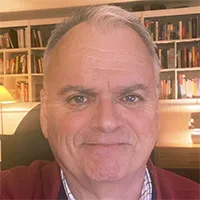
Jim Dahany
Increased profitability was another key message during the webinar. First, because of savings when pharmacies stop paying pharmacist-level wages for technician or assistant work. Second, because of new revenue from the reallocation of pharmacists’ time. “Between the billable fees for pharmacy services now available with scope and the opportunity to solve the drug problems that generate recurring revenue from adherence, the money is there. But we’ve got to get out of our own way,” said Dahany.
However, both Dahany and Katelnikoff emphasized the need to invest in higher wages for technicians and assistants to generate more supply and increase loyalty. “Everyone says it’s very difficult to get [technicians]. That, with great respect to our entire industry, is a completely self-inflicted wound,” said Dahany. Added Katelnikoff: “In our pharmacy, we’ve had an assistant for upwards of six years and she’s paid close to the technician wage. And she takes great pride in her work.”
On that note, another critically important benefit of the P1st model is its impact on workforce wellness. Dahany noted that all team members are visibly more relaxed and far more likely to enjoy their workday. “This is the antidote to burnout,” he said.